
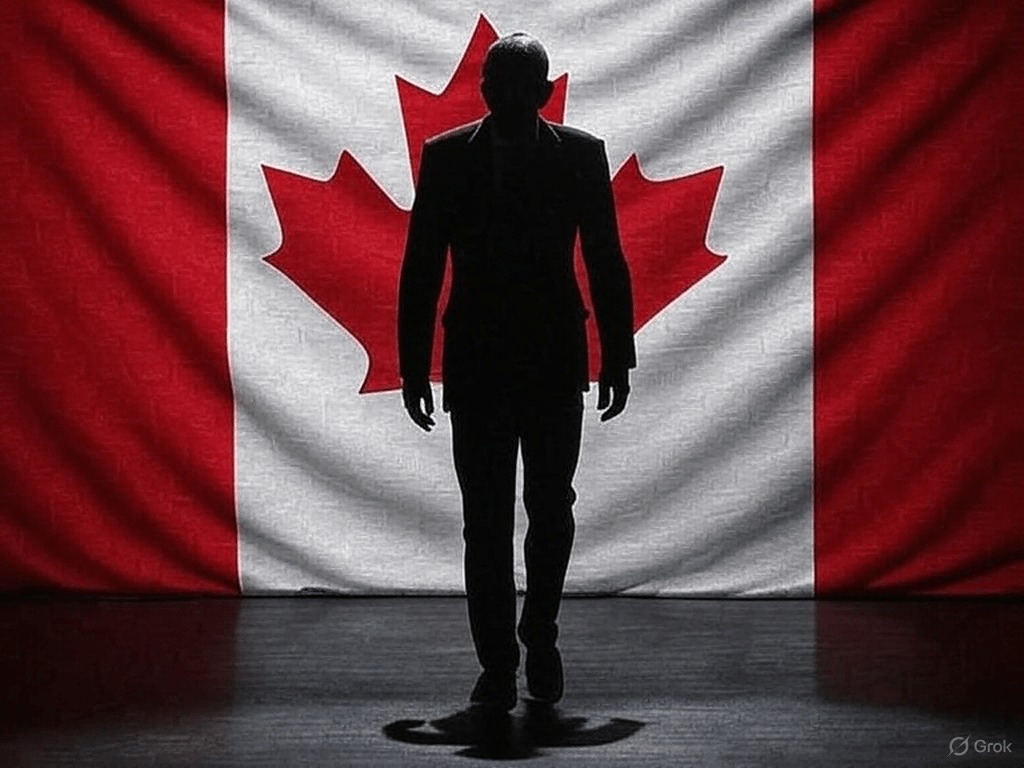
On Monday evening, Pierre Poilievre and the Conservative Party suffered a massive defeat at the hands of Mark Carney and the Liberal Party. Canadians and American observers alike are all wondering one thing: what went wrong? Amid all the speculation, too few people seem to be able to pinpoint the exact moment that things took a downturn for the CPC.
Let’s go back in time to just a few months ago on December 20, 2024. Ipsos had just published a poll showing Pierre Poilievre’s Conservative Party sitting with a massively comfortable 25% lead over Justin Trudeau’s Liberals. This trend had been ongoing for a few months, but now it had peaked to an unbelievable level. Canadians were fed up with Trudeau’s corrupt and disastrous policies; Poilievre was about to get a bold mandate from the people. Given the political landscape and state of the economy (which had suffered through a decade of lethal Liberal agendas), it would be virtually impossible for Poilievre to blow such an enormous lead. The election appeared to be a done deal.
That all changed in January 2025 when Justin Trudeau did possibly the one and only intelligent thing in his entire career: announce his resignation and call for a Liberal Party leadership race. With the entrance of new blood in the party leader’s seat and Prime Minister’s Office, Liberals became reinvigorated and Canadians reopened their minds to the idea that the LPC could finally generate something positive for the nation. With this game-changer, Poilievre’s numbers started to bottom out.
It wasn’t solely the fact that the LPC pulled a Biden-esque bait-and-switch halfway through an election year. Mark Carney deserves some credit for the drastic tank in CPC poll numbers. Despite not being the most eloquent or captivating speaker, he seemed likeable. His ideas sounded intelligent and he indeed had the background to bolster this image. Going from Goldman Sachs to serving in the Department of Finance to being Governor of the Bank of Canada and later Bank of England, and then finishing off with multiple federal advisory roles, gave him the polished and experienced look he needed. It was clear that Poilievre was not prepared for this. Despite being given almost a month to anticipate a potential resignation when rumours began to circulate in mid-December 2024, and subsequently another two months during the Liberal leadership race, he was at an apparent loss for how to properly and effectively attack his newfound political opponent. Aside from his exhausted anti-carbon tax rhetoric, Poilievre’s platform was built on the fact that he wasn’t Justin Trudeau. But this strategy only works until the person you’re telling everyone you’re not is no longer in the picture as a competitor.
To make matters worse for the Conservatives, both Carney and Poilievre had begun to embrace each other’s platforms to a degree that started to make them indistinguishable. Poilievre was shifting more of his positions to appeal to the Liberal-leaning moderates (e.g. his hardline vocal stance against Trump, his proposal for dollar-for-dollar tariffs, his overall avoidance of key social issues like MAiD and abortion, etc.) and Carney likewise towards Conservative-leaning moderates (e.g. his sudden support for reopening pipelines, his decrease of the carbon tax, etc.). The combination of these things started to mold together party platforms in voters minds until their leaders became two sides of the same coin. Policies aside, however, Carney held some critical advantages over Poilievre. A main one was his experience in global finance as opposed to his counterpart, a career politician. Additionally, for whatever inexplicable reason, Poilievre was viewed by many as being cocky, condescending, or demeaning. Whether this perception was cemented by the viral “apple-chewing” video or just the general way he spoke in interviews and speeches, shallow voters were turned off by the attitude they had wrongly attributed to him in their own heads.
So fast-forwarding to mid-March 2025, we find Pierre Poilievre without a platform. There he and his supporters sit at his crowded rallies, chanting vague slogans like, “Bring It Home!” After all, “Axe the [Carbon] Tax” (which later became “Axe the Inflation Tax”) didn’t quite work anymore since most uninformed Canadians were told by state propagandists that Carney had beaten Poilievre to the punch and already done so. As I explained in my prior post, Carney was effectively stealing the Conservative’s platform, and Poilievre was at a loss for what to campaign on anymore. His entire race was built on the carbon tax and little else. For the most crucial month of the election cycle, he essentially campaigned as a man without an agenda.
Now here we stand, in present day, just over 24 hours after a devastating defeat for the CPC — a party that was supposed to be a shoo-in on Election Day. But it wasn’t the margin of loss that made Monday night so devastating; in fact, the Party overall did quite well. According to CBC, the Conservatives walked away with the highest share of the popular vote in the last two decades, notably outperforming Stephen Harper’s popular vote percentage in 2011. Yet it clearly wasn’t enough. The CPC was able to stave off a Liberal majority, but just barely, as it came within an arms reach of three seats. The devastating part of Monday night isn’t found in the polls and charts; it’s found in the fact that Canadians are strangely not ready for a “change of the guard” on Parliament Hill. The majority are either apathetic or gleefully willing to subject themselves to another four years of victimization by corrupt and malicious bureaucrats. The last ten years has taught millions of Canadians nothing.
For a moment though, let’s entertain a hypothetical as we examine a potential underlying reason for why Poilievre lost — not only his chance to lead the country as PM but also his own riding in Carleton. One among the candidates who did win their ridings last night was Roman Baber, who had been removed from the Progressive Conservative Party (the provincial “branch” of the CPC) by Ontario Premiere Doug Ford for opposing his draconian Covid-19 measures and lockdowns. Baber, an outspoken right-wing voice, won his riding of York Center; York Center is a federal district in the GTA (Greater Toronto Area) which has largely been a Liberal stronghold for the last 60+ years, excluding 2011-2015, when the first Conservative since 1958 was elected for a single term. It seems curious that such a staunch ideological conservative would succeed in a deep red riding. The GTA is notoriously known for its affinity for radical leftism, yet they welcomed Baber with a warm embrace by a margin of almost 6,000 votes, thereby flipping the seat from Liberal to Conservative. (This was only one of another 30 seats flipped to the Conservatives that night.) Canada was indeed ripe for a change in government, but the shift to more hardline conservatives like Baber — coupled with what I’ve already written regarding the blurring of party policy lines — begs the question: could Poilievre have won if he had dug deeper into the CPC’s more right-wing roots? To restate this, is it possible that Poilievre’s gradual movement towards moderate progressivism was actually the nail in his political coffin, as opposed to the inverse? Perhaps he was rejected for not being right-wing enough. As I have already explained, moderates will feel less compelled to vote for a CPC Liberal if he’s parroting the same talking points as the more polished and experienced LPC Liberal. Of course, we will never definitively know the answer, unless the Party elects to allow Poilievre to stay on as leader and try for Round 2 in 2028 or sooner. But this overall question is one that the CPC needs to ask itself regardless.
Poilievre’s campaign can be further defined by “missed opportunities.” Carney’s history and recurring scandals gave constant ammunition to Poilievre through the whole campaign, yet he never seemed to want to fire a shot. Brookfield Asset Management, his alleged ties to the Kushner/Trump family, his phone call with Trump that he had lied about, his deceptive tactics surrounding the carbon tax — rarely were these things ever mentioned by the Conservative campaign. Additionally, just in the last two days, some major right-wing influencers who have a large presence both here and in the US disclosed that they had offered help and support to Poilievre but were 100% sidelined and ignored by his team. A few of these individuals were the Nelk Boys, a prominent group of young podcasters who originated from Mississauga. Rumble CEO Chris Pavlovski also shared that he had a similar experience. Rather than utilize these influencer’s followings for his advantage, Poilievre opted to remain disassociated from them. While a case can be made that distancing yourself as a Canadian politician from American-adjacent celebrities at this current time is potentially not an unwise thing, Poilievre could have benefited immensely from their popularity, their support, and the support of their fanbase. Likely due to this and his excessive comments against the immensely popular US president, he made unnecessary opposition south of the border.
There will likely be much analysis throughout the coming weeks that will be debated by the online keyboard warriors and media pundits. Along with determining if Poilievre is fit to continue to lead, the Conservative Party desperately needs to conduct a through introspective into what went wrong and all the contributing factors to Monday night’s loss. Unfortunately for the future of the party, several disgruntled Poilievre-supporters are choosing to lay the blame at Donald Trump’s feet instead of facing their own shortcomings and mistakes head-on. We are not at a loss for time to correctly evaluate who or what is responsible for what should have been a mass majority win; the next three years can be spent figuring that out. Let’s just hope we still have a strong country by the end of it.
Cover Image Generated by GrokAI
Discover more from The Culture Clash Blog
Subscribe to get the latest posts sent to your email.
 The Culture Clash Blog
Leave a comment